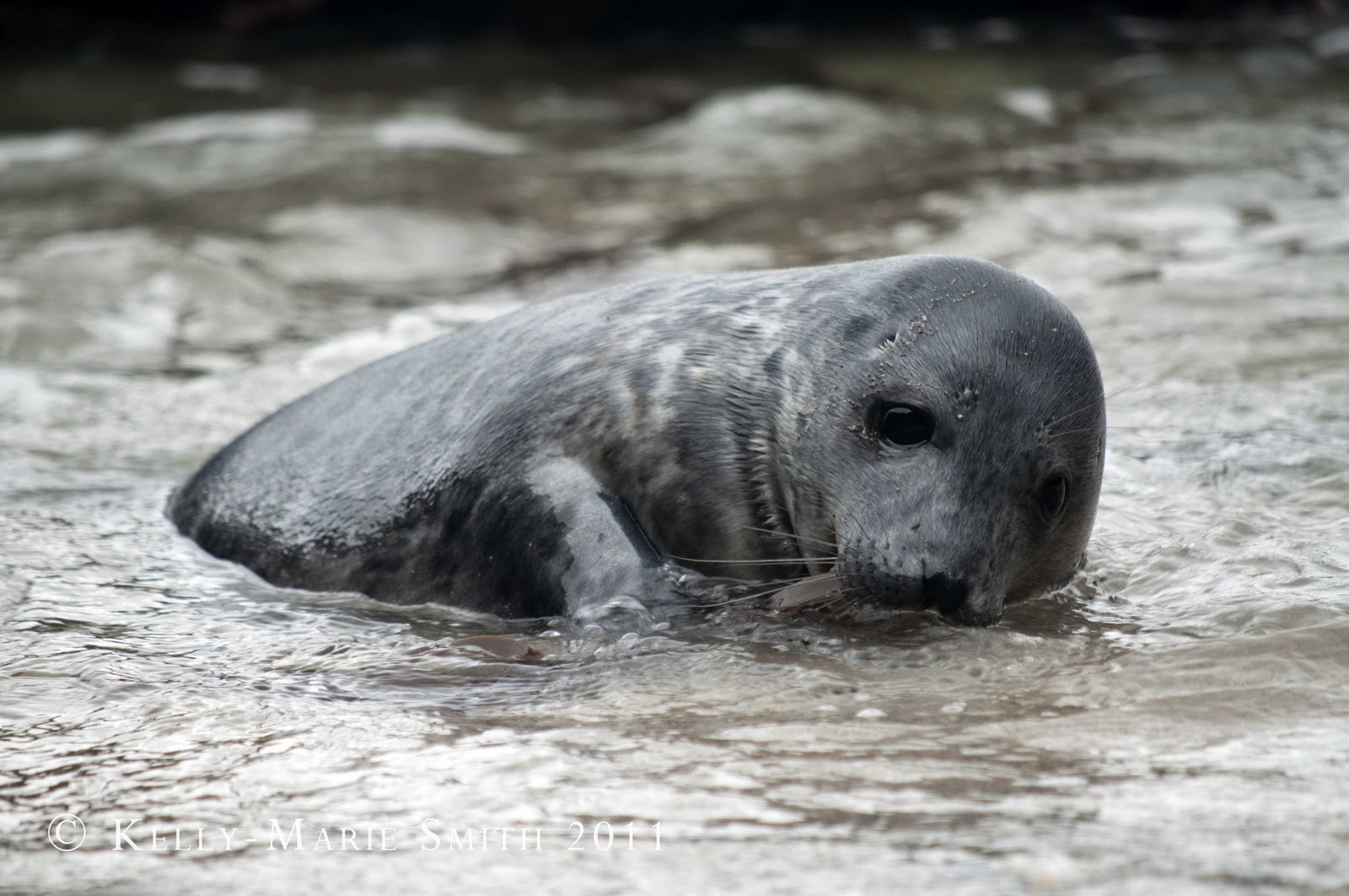
I have had the pleasure of photographing grey seals in cornwall, which can be seen in previous post, but I have never been so close to this amount of seals hauled out before.
Monday, 20 August 2012
Farne Island Seals
The Outer Farnes are less 'populated' and are home to between 3,000 and 4,000 of Atlantic Grey Seals. It is one of the most important colonies europe and second largest sea colony in the UK. There are around 1,000 seal pups born in late Autumn each year, which is great to see. They can often be seen hauled out on the slopes of the volcanic rock that runs through most of the Outer Farne Islands.
I have had the pleasure of photographing grey seals in cornwall, which can be seen in previous post, but I have never been so close to this amount of seals hauled out before.
Tuesday, 31 July 2012
Arctic Terns
Terns are seabirds in the family Sternidae, previously considered a subfamily of the gull family Laridae. They are beautiful birds and capture lovely shapes with there wings. Here are some images of the Arctic Tern captured at the Farne Islands, some of the selected show the seabirds collecting food for there chicks.
Friday, 27 July 2012
Diving Gannets
I have had a break from blogging for a bit and have been using my photography Facebook page instead. But I am now getting this back up and running.
Recently I have been on a photography trip to the Farne Islands, where I had the pleasure of seeing a variety of wildlife. In this post I have decided to show the images I captured of Gannets. They are distinctively shaped with a long neck and long pointed beak, long pointed tail, and long pointed wings. I watched small groups of Gannets from the boat as they glided low over the water. They feed by flying high and circling before plunging into the sea, which I have managed to capture in some of the images before.
Monday, 14 May 2012
Metamorphosis: Fourth Stage
Fourth Stage: Adult Butterfly
The adult stage is what most people think of when they think of butterflies. They look very different from the larva. The caterpillar has a few tiny eyes, stubby legs and very short antennae. The adults have long legs, long antennae, and compound eyes. They can also fly by using their large and colorful wings. The one thing they can’t do is grow. The caterpillar’s job was to eat. The adult’s job is to mate and lay eggs. Some species of adult butterflies get energy by feeding on nectar from flowers but many species don’t feed at all.
Flying comes in handy. The adult female can easily fly from place to place to find the right plant for its eggs. This is important because caterpillars can’t travel far. Most adult butterflies live only one or two weeks, but some species hibernate during the winter and may live several months.
The adult stage is what most people think of when they think of butterflies. They look very different from the larva. The caterpillar has a few tiny eyes, stubby legs and very short antennae. The adults have long legs, long antennae, and compound eyes. They can also fly by using their large and colorful wings. The one thing they can’t do is grow. The caterpillar’s job was to eat. The adult’s job is to mate and lay eggs. Some species of adult butterflies get energy by feeding on nectar from flowers but many species don’t feed at all.
Flying comes in handy. The adult female can easily fly from place to place to find the right plant for its eggs. This is important because caterpillars can’t travel far. Most adult butterflies live only one or two weeks, but some species hibernate during the winter and may live several months.
Sunday, 13 May 2012
Metmorphosis: Third Stage
Third Stage: Pupa (Chrysalis)
When the caterpillar is full grown and stops eating, it becomes a pupa. The pupa of butterflies is also called a chrysalis. Depending on the species, the pupa may suspended under a branch, hidden in leaves or buried underground. The pupa of many moths is protected inside a cocoon of silk. This stage can last from a few weeks, a month or even longer. Some species have a pupal stage that lasts for two years. It may look like nothing is going on but big changes are happening inside. Special cells that were present in the larva are now growing rapidly. They will become the legs, wings, eyes and other parts of the adult butterfly. Many of the original larva cells will provide energy for these growing adult cells.
Saturday, 12 May 2012
Metamorphosis: Second Stage
Second Stage: Larva (Caterpillar)
This is called a caterpillar if the insect is a butterfly or a moth. The job of the caterpillar is to eat and eat and eat. As the caterpillar grows it splits its skin and sheds it about 4 or 5 times. Food eaten at this time is stored and used later as an adult. Caterpillars can grow 100 times their size during this stage. It will grow up to 2 inches long in several weeks.
Friday, 11 May 2012
Metamorphosis: First Stage
The First Stage: Egg
Eggs are laid on plants by the adult female butterfly. These plants will then become the food for the hatching caterpillars. Eggs can be laid from spring, summer or fall. This depends on the species of butterfly. Females lay a lot of eggs at once so that at least some of them survive. Butterfly eggs can be very small.
Tuesday, 3 April 2012
Digital Camera Magazine
As you may have seen in my previous posts I have had some of my mining images published, on websites and in a regional magazine. But now my underground photography has gone national, if you are a regular reader of Digital Camera Magazine then you can see my underground photography has been suggested for '10 things to try'. This is quite an achievement as it is encouraging other photographers to try something different as well.
Thursday, 29 March 2012
Brockholes
As I have returned home for a bit I decided to visit Brockholes nature reserve. I really enjoyed it, the reserve is beautiful and there is plenty to see. I will definitely be visiting again at the weekend before returning to Cornwall.
I have decided to experiment with the colours in the images that I captured on this shoot. I have experimented with black & white layers within my images and I really like the end results.
Friday, 23 March 2012
Microscopy
I am a fan of using microscopes to create interesting images and to capture the intricate detail of the subjects. Below I have displayed a number of images which are taken from viewing Butterflies under the microscope. I will continue to do more as my project progresses.
Tuesday, 28 February 2012
Kestrel
I haven't posted in a while so I thought I should show you the outcome from a shoot the other week. Here are a couple of shots of a Kestrel which was perched on the side of the cliff next to me, whilst Grey Seals below, were intrigued by a dead gull in the water.
Sunday, 19 February 2012
WHS Cornwall
So as you have noticed by the posts in my blog, I enjoy taking photographs of the world heritage sites in Cornwall. On this shoot I decided to photograph the mines at night with a 64% cloud coverage which makes a change to a clear sky that I normally work with. I will be re shooting at this location as I believe there is a lot of potential for some interesting shots.
Saturday, 18 February 2012
Inspiration
I believe that attending photographers talks are the best source to gain inspiration for your own photographic practice. Recently, I had the chance to attend Chris Packham's 'Goes Totally Wild' talk in Dorset. I enjoyed the talk and I found his experimentation very interesting and it influenced me in the shot I did the following day. The photographs are not sharp as I only had 55-200mm but I couldn't miss the opportunity to capture the otters. Therefore I tried different compositions that I would not normally do.
I have tried to keep the subject small in the top corners and have a lot of negative space, this is different to what is nearly done in wildlife photography.
Tuesday, 17 January 2012
Mining District: Area 1: Botallack
As I have been based in Cornwall for the past two years, I decided to complete a photographic project which looks at the county's heritage. Cornwall is renown for mining and has been listed as one of the world heritage site's. The mining districts have been split into 10 areas and I have managed to photograph 8. As the 34th International Mining Games are being hosted by CSM in Cornwall, I thought I would post my photographs of each area to the run up of the games in March.
Area 1: Nr St.Just, Botallack Mine.
The mines perch beautifully on the cliff face as tunnels run underneath the old engine houses traveling out into the Atlantic for more than a mile, forming a vast industrial complex under the waves.
Wednesday, 11 January 2012
Magazine Publication
Cornwall Today celebrates the county's diversity by means of evocative images and engaging writing and has been voted the UK's best regional magazine. The January issue welcome page displays my photograph, this is a nice way to begin 2012.
Thursday, 22 December 2011
Metamorphosis Study
I haven't blogged for a while as I have been focusing on my university work. So I thought I would do a update and inform you as to what I am studying for my final year project. I have decided to focus on Metamorphosis.
Metamorphosis is a biological process by which an animal physically develops after birth or hatching, involving a conspicuous and relatively abrupt change in the animal’s body structure through cell growth and differentiation. Butterflies, moths, beetles, flies and bees have complete metamorphosis. The young (called a larva instead of a nymph) is very different from the adults. It also usually eats different types of food.
There are four stages in the metamorphosis of butterflies and moths: egg, larva, pupa, and adult.
The photographs below demonstrate the larva stage. I will be photographing all the stages throughout my project.
Metamorphosis is a biological process by which an animal physically develops after birth or hatching, involving a conspicuous and relatively abrupt change in the animal’s body structure through cell growth and differentiation. Butterflies, moths, beetles, flies and bees have complete metamorphosis. The young (called a larva instead of a nymph) is very different from the adults. It also usually eats different types of food.
There are four stages in the metamorphosis of butterflies and moths: egg, larva, pupa, and adult.
The photographs below demonstrate the larva stage. I will be photographing all the stages throughout my project.
Friday, 14 October 2011
The Return to Cornwall
After a long summer I have now returned to Cornwall to complete my third and final year at Falmouth University studying Marine and Natural History Photography. The summer at home made me a bit anxious for coming back to university as I have been completing side projects of my own producing motorsport videos for my brother. But after two weeks of studio shooting a Chrysalis, I decided to go on a shoot with my boyfriend for his project, and this reminded of why I am studying in Cornwall.
The experience of watching the Grey seal pup was amazing, they are so care free casually playing with seaweed on the beach. The photographs below are just a little selection of the shots that I was able to capture, they show the behaviour of the pup in there natural environment.
Monday, 19 September 2011
Light Trails
An unfortunate event of breaking down on the motorway, gave me ample time to practice my light trail photography. The hard shoulder is a perfect spot for the shots as you don't exactly have to wait ages for lighting. The photographs are not the best quality as I had no tripod and didn't want to get to close, but it kept me entertained while I waited for recovery.
Friday, 16 September 2011
Heritage Restored
Haigh Hall windmill is the only remaining windmill in Greater Manchester. It’s a historic wind pump and a familiar landmark near Haigh Hall country Park. Built in 1845, Haigh’s historic windmill was originally used to pump water from two ponds to the reservoir at Haigh Brewery. It has been disused for decades but is an iconic building that is a valued part of the rural scene in Haigh.
The restoration project included repairing the damaged brickwork and replacing the broken and missing sail, this will then conserved the windmill for future generations. Below are some photographs which I took of the restored building.
Friday, 26 August 2011
Distinctive colours
The peafowl bird species includes male peacocks and female peahens. You will only find the colorful peafowl feathers on the male peacocks, with peahens exhibiting more muted colors in their feathers. Peafowl are best known for the male's extravagant tail, which it displays as part of courtship, the colours within the plumage are striking. Unfortunately only one of the peacocks displayed there plumage and had quite a few of his feathers missing.
Subscribe to:
Posts (Atom)